
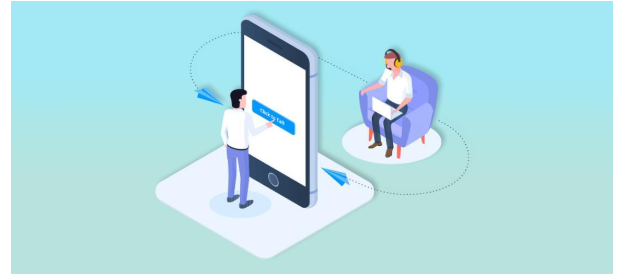
A few seconds is all it takes for an interested website visitor to disappear. Not because your product isn’t good. Not because pricing is off. Simply because reaching a real human felt like work.
I’ve watched this happen quietly on high-traffic business sites. Strong landing pages. Clean messaging. Paid campaigns bring in the right audience. And yet, the moment someone wants to ask a question, there’s friction. A form. A wait. An email auto-reply that promises a response “soon.” Curiosity fades fast.
That gap between interest and conversation is where most businesses lose momentum. And that’s exactly where click-based calling fits in—not as a flashy add-on, but as a practical way to meet visitors at the moment they’re ready to talk.
Why click to call software removes hesitation at the exact right moment
Click to call software works because it respects how people behave online. When someone is browsing your site and thinking, “I just need a quick answer,” they don’t want to search for a number, copy it, switch devices, or explain themselves twice.
They want one simple action.
A visible call button does that. It shortens the path from intent to conversation so much that the decision feels natural, not forced. For contact center teams, that single click changes the quality of incoming calls. These aren’t cold dials. They’re warm, context-aware conversations started by users who already know where they are and why they’re calling.
What stands out in real deployments—especially with modern contact center solutions—is how quickly response times improve without adding pressure on agents. Calls arrive with intent, not confusion. Agents spend less time figuring out what the caller wants and more time actually helping.
Speed matters more than persuasion
There’s a quiet truth most marketing decks don’t highlight: visitors don’t need more convincing. They need faster answers.
One SaaS company I worked with saw this clearly. Their product demos were solid. Their content explained everything well. Still, prospects kept dropping off after pricing pages. When they added a click-to-call option near key decision points, the change was immediate. Not dramatic. Just steady and real.
People called with very specific questions. Billing clarity. Integration doubts. Timeline concerns. These were not objections created by sales tactics. They were blockers that needed a human voice.
That’s the strength of click to call software—it doesn’t push conversations. It invites them at the right time.
How contact center solutions quietly do the heavy lifting
From the outside, click-to-call looks simple. Button. Ring. Conversation.
Behind the scenes, modern contact center solutions are doing something smarter. Calls can be routed based on page context, business hours, or customer type. A visitor on a support page reaches support. Someone on a product page reaches sales. No guessing. No transfers that drain patience.
This matters more than people think. When callers reach the right agent the first time, call duration drops naturally. Satisfaction goes up without scripts getting longer. Teams don’t rush; they just stop repeating themselves.
Platforms like those offered by providers such as SAN Software’s focus heavily on this balance—keeping the experience smooth for the visitor while giving managers visibility into call patterns, peak intent moments, and missed opportunities.
Faster connection changes how teams work
Once click-to-call is in place, internal behavior shifts too.
Sales teams stop chasing low-intent leads and start responding to real-time interest. Support teams notice fewer angry calls because issues are addressed earlier. CX leaders finally see where digital journeys break before frustration builds.
One startup founder put it simply during a review call: “Our calls feel easier now.” That wasn’t about technology. It was about timing.
Click to call software aligns teams around the same moment of truth—the second a visitor decides to talk.
Real-world scenario: from browsing to booking
Picture this. A mid-size logistics company runs ads targeting operations managers. Visitors land on a service page, scroll, pause at the pricing section, and hesitate. Earlier, they’d leave.
With click-to-call enabled, a small call prompt appears after a few seconds of inactivity. Not aggressive. Just a present.
The call connects to an agent who already knows which page the visitor was on. No awkward opening. The conversation starts mid-thought. Within minutes, a follow-up meeting is booked.
Nothing dramatic happened. No script. No pressure. Just faster connection.
That’s the pattern seen again and again across contact center solutions that focus on real-time engagement instead of delayed callbacks.
Where many businesses get it wrong
Adding click-to-call alone isn’t enough. Some teams treat it like a badge rather than a bridge.
The button is buried. Or it routes every call to the same queue. Or it’s live when no one is available, leading to missed calls that frustrate users more than forms ever did.
The teams that see results treat click-to-call as part of the customer flow, not a feature. They decide where it belongs, when it appears, and who answers. They test placement. They listen to recordings. They adjust.
That’s where contact center solutions earn their value—not in dashboards, but in small improvements that compound over time.
Actionable takeaways for CX and growth teams
If you’re considering click to call software, a few practical steps help avoid common mistakes:
- Place call options near high-intent moments, not everywhere
- Route calls based on page context whenever possible
- Keep availability honest—hide the option when teams are offline
- Review call outcomes weekly, not quarterly
- Treat these calls as conversations, not conversions
None of this requires a massive rollout. Start small. One page. One team. Measure what changes.
Why this matters more as traffic quality improves
As ad costs rise and organic traffic becomes harder to earn, every visitor matters more. Click to call software helps you respect that investment by reducing drop-off at the exact moment curiosity peaks.
For call center managers, it brings clarity to demand. For CX leaders, it improves first-touch experience. For founders, it turns website traffic into actual conversations instead of silent exits.
The interesting part isn’t the technology itself. It’s how naturally people use it when it’s done right.
Visitors don’t announce when they’re ready to talk. They just pause. Scroll back up. Hover.
A single click at that moment can change the entire direction of the relationship.